La Préfecture, the love of my life. Immigrants in France must have a very close relationship with the préfecture. It’s the place where we have to go – every 3 months, in some cases – to obtain our residency cards and make sure we are not sans-papiers. France doesn’t exactly have a “permanent resident” status for most people, so almost everyone starts out with a carte de séjour that must be renewed every single year. Well, those of us who were already living in France before the visa rules changed this past June. For the newbies, the visa serves as the carte de séjour for the first year, and then every year after that, it may be changed into a carte de séjour depending on if your préfecture likes you or not.
Anyway, it’s a rather annoying process because the préfectures are usually too inept to put the list of required documents on their website, so you must first go the préfecture and wait in line for an hour just to pick up this magic list. And then when you do return to the préfecture with all of the documents, they usually require something else that wasn’t on the list and that you had no idea you would even need, so of course you didn’t bring it with you (or its photocopy since you must have originals and photocopies of everything.)
Even if you do have all of the documents, it can take months and months to get your actual carte de séjour, so you have to keep going back to the préfecture to find out why you haven’t received it yet, or to request a new récépissé – the receipt that proves you did apply for it – or to apply again when the post office loses your carte in the mail (been there) or when you move to a different département and your old préfecture refuses to send your dossier to the new one (done that). In the 3.5 years I’ve been in France, I’m already on carte de séjours #6 and #7.
I’ve already explained the first three years of my CDS adventures in the Love Affair with the Préfecture post, so here’s an update:
Technically, I applied for CDS #6 way back on June 16, 2009, right after David & I moved to Chambéry. I needed to change the address on it, which involves making a whole new card, so even though I had just renewed it in Annecy, I had to apply all over again. I did receive a récépissé on July 1st, which was good until September 30, but of course that date came and went and no word from the préfecture. I used to return every month and bug them about it, but they just kept telling me that Annecy hadn’t sent my dossier to Chambéry yet and that I would receive a new récépissé soon. That never happened. The card with my Annecy address on it is actually still good until May, so I wasn’t too overly concerned about it – especially since the only real reason I would need to have the correct address on my CDS would be for CAF, which I’m not eligible for since France thinks I’m so rich now with my 13k a year.
So, I gave up and stopped bugging the préfecture about it. Then March came and I needed to gather documents to renew my card for yet another frickin year of temporary status, and I was a little worried that they’d yell at me for something. Luckily the woman was really nice and discovered that Annecy had FINALLY sent my dossier to Chambéry a few weeks ago and CDS #6 was in the process of being made. I should receive it soon, even though it expires in less than 2 months. How amazingly useful.
Since I had all the documents and David was able to go to the préfecture with me this morning, I told the woman I was just going to do the renewal process today and get it over with since CDS #6 would basically be useless to me. She agreed. She didn’t dispute any of the documents, even though some of my “originals” were color copies of older documents (I love my printer) and some were a lot older than 3 months (2007 anyone?) and she actually remembered the communauté de vie paper that they tried to forget the last time. But it was all of the same paperwork I had given them in June, and that card was actually being made – albeit NINE MONTHS LATE – so my documents must be good enough for them.
Though of course I won’t stop feeling stressed out about it until I receive CDS #7 (that’s my renewal card, not my change of address card; are you still following me?) since we are flying back to Geneva from Croatia, which is NOT in the EU or Schengen zone yet, on May 8 – exactly one day after my current CDS expires. Plus the university cannot and will not give me my salary for the remaining months of my contract unless I have a valid CDS. So it’s not only the fact that I could be “illegal” in France; it’s also a matter of being let back into France and being able to pay rent.
I can start applying for citizenship in October, and hopefully get it by the end of 2011 or early 2012. I will feel so relieved to finally have a permanent status in this country. Except apparently even French citizens have their citizenship questioned nowadays, so that’s not very comforting.
David said that people joke about the fonctionnaires who work at the préfecture. Ceux qui ne réusissent pas le concours de la Poste travaillent à la Préfecture. I wonder how true that is…
Tags: Carte de Séjour · French Culture
How many textbooks do you think include vocabulary words like this?

If you don’t speak either German or French, the vocabulary word is “homosexual couple” and the sample sentence says “The homosexual couple is going to adopt a child.” If only that were true in more than 2% of the world…
The next word is common-law couple. None of this married or single as the only options.
You rock, busuu.com! Equality for all!
Tags: Learning Other Languages

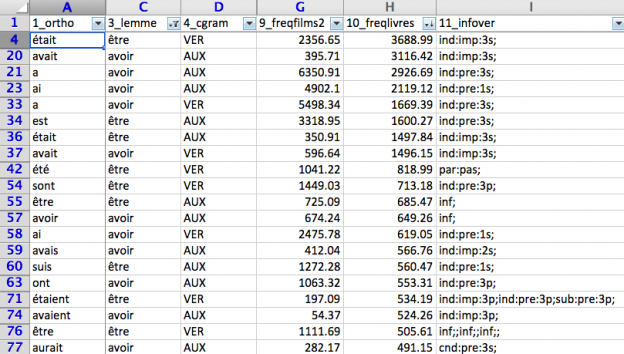
A Frequency Dictionary of French: Core Vocabulary for Learners
I just learned about this book today and I really wish I could go to a bookstore or library and look at it. Amazon’s Look Inside feature only includes the introduction and none of the actual content but Routledge’s site offers a few sample pages to download and lets you view 30 pages total.
I love frequency lists and all things based on corpus linguistics. I’m really interested in knowing how much informal and spoken vocabulary is included in this book. The corpus was based on 23 million entries, half spoken and half written – but even some spoken language is rather formal (EU parliamentary debates, for example) when compared to everyday language that you can hear in schools or stores.
Libraries in France aren’t all that great, and the bookstores around here have tiny English sections (usually just novels) so I have to rely on the internet for my linguistic and language books. I really do miss being able to wander through Borders or Barnes & Noble and skim through all of the books. Sure, there are plenty of language books written in French, but they are mostly méthodes de Français Langue Etrangère and that’s not exactly what I’m looking for. If someone knows of a frequency list book like Routledge’s but available in French bookstores, let me know.
These frequency dictionaries are also currently available in Spanish, Portuguese, German, Mandarin and Contemporary American English. Arabic and Czech are forthcoming in 2010, but no Italian yet.
Tags: Learning French
I was pleasantly surprised by the weather yesterday. Now that March is here, it seems like spring is too. It was sunny and not raining for once, so I got to walk to work. I hope it stays this way and winter doesn’t come back because the sunshine gives me motivation to actually get things done. Plus I have less than 7 weeks of my job left, and then I go on a lot of fun trips this summer (Belgium, Netherlands, Germany, Denmark, Croatia, and Italy!)
I am continuing with reviewing the online language communities, though I have to admit I’m only focusing on 4 or 5 since the rest did not have much free content or they were simply sites for finding language teachers. I’m most interested in ways to learn vocabulary and pronunciation online for free, without necessarily needing a teacher or having to pay for anything.
And I am still working on a new informal French video, though I can’t decide if I should focus on more reductions in speech or informal vocabulary missing from textbooks. Perhaps I’ll just do both! The first video has been up for about 2 weeks and it already has over 1,300 views, so I hope I’m helping all of those people to understand spoken French.
The French Listening podcast now has 20 mp3s available, and I think I’m going to take a little break before I figure out what to do next. I’ve got lots of audio to transcribe for the next round – interview with David’s grandma about her family moving from Italy to France in 1931 to escape fascism and what Annecy was like during the war plus random conversations that are basically eavesdropping. I wanted to record natural speech without anyone knowing that I was in fact recording because people change the way they speak (they tend to use less slang and talk slower) when they know they’re being recorded. I tell them afterwards that I was recording, of course!
Lastly, I’ve decided to focus more on the multilingual aspect of the site and attempt to update the vocabulary lists as well as the comparative tutorials. I’m looking for a way to allow people to choose which languages they want to compare instead of keeping with the English-French-Italian-Spanish order that is currently available. Any coders/tech people know how to do this? Javascript maybe? So for example, if someone wanted to compare just English-French-German, they would just need to choose those languages and the page would automatically generate with only those lists.
Thanks to those who bought my French Language Tutorial book or sent a donation. I really appreciate your support!
Tags: Website
February 26th, 2010 · 7 Comments
As of today, the French Language Tutorial is available for purchase as an e-book (PDF format) or as a coil-bound paperback book (8.5″ x 11″). It contains all of the original French tutorials (French 1-7) and French Phonetics, plus I included IPA transcriptions for most of the vocabulary lists and for all of the verb conjugations (that are not provided online). It is arranged in the same way as the online tutorials, so you can still use the free mp3s, flashcards, & exercises along with the book.

Everything that is currently available on the website will remain free. I am not going to restrict access to those materials. I simply wanted to give people the chance to have hard copies of the tutorials that are ready to be printed or delivered as a traditional book, especially for those who are not at their computers and online for 12 hours a day.
E-Book in PDF format
185 pages / 8.5″ x 11″
Immediate Download
$9.95
|
Coil-Bound Paperback Book
224 pages / 8.5″ x 11″
Shipped worldwide by lulu.com
$24.95

|
The e-book has fewer pages because the margins are smaller, but it is the same exact information. I chose a coil binding for the paperback so that the book can lie flat on a desk, and so it would be easier to write notes on the pages or use it in conjunction with an mp3 player while following along with the audio.
I am working on putting together another French book (on informal language & slang, of course) and a multilingual one, but I have no idea when they will be available. My next project is going to be working on the subscription materials for the French listening podcast, and I’ve also got work, real life and sleep to try to catch up on. I’ve added a Store to the site, so check there for any new books in the future.
Tags: Learning French · Website
February 22nd, 2010 · 6 Comments
I’ve decided I’m going to try out the free features of the online language learning communities, and report back with my findings (as well as prices for the pay features). But the first challenge is just finding all of the language communities. These are the ones that I plan on reviewing. Can anyone add others to the list? I know I must be missing some!
Tags: Learning French · Learning Other Languages
A study from the University of Haifa shows that “perception of second language speech is easier when it is spoken in the accent of the listener and not in the ‘original’ accent of that language.” So if you are an American learning French, you will understand French better if it is spoken with an American accent rather than a native French accent. Sounds a little like common sense, right? The researchers say this is important is determining the cognitive factors associated with understanding and learning foreign languages; but as for teaching foreign languages, I’m not so sure that teaching exclusively in the non-native accent as the title of the article suggests is the best idea.
Perhaps at the very beginning stages of language learning, a non-native accent would be more helpful than a native accent in simply understanding the language. But if a non-native accent is the only one a learner ever hears, then s/he will have a hard time understanding all other accents as well as learning how to pronounce the language in a more native-like accent. Students should be exposed to several native and non-native accents of the language because obviously not every French speaker in the world speaks with the standard accent presented in learning materials. How many French language materials teach the Picardie or Belgian or Toulousian accents?
This leads into the native vs. non-native teacher question and just how much effect the teacher’s accent has on the students’ learning. As long as the student gets enough input in the target language outside of the classroom, it really shouldn’t matter what accent the teacher has. Most classes meet a few hours per week, which is not sufficient enough for learning a language, so the student needs to listen and study as much as possible on his/her own. The teacher needs to be able to answer questions and explain the grammar and encourage student participation and motivation, but to me, the accent isn’t really all that important because shouldn’t the students be talking more than the teacher anyway?
What do you think about this study? Is it important or does it just reiterate what we already know?
Tags: Teaching English & Other Languages
February 18th, 2010 · 7 Comments
For those who also love multilingual vocabulary lists or verb conjugations, I’ve updated the Romance and Germanic lists so they fit better on the screen. Each vocabulary category or verb now has its own page so they won’t take forever to load. The Romance languages include French, Italian, Spanish and some Portuguese for the vocabulary part and only French, Italian and Spanish for the verbs. Germanic includes German, Dutch and Swedish. I do plan on adding more languages and filling in the missing vocabulary in certain sections, but I’m not quite sure what to do yet about the width of the pages. Some of the French-Italian-Spanish-Portuguese sections are crowded because of the 5 columns (English is first). I’ll figure something out. In any case, it will be a while before I can make any major changes. Here are the index pages with links to each individual page:
Romance Languages Vocabulary
Romance Languages Verbs
Germanic Languages Vocabulary
Germanic Languages Verbs
Other multilingual sites:
Book2 is my favorite as it provides 100 audio lessons on basic phrases and vocabulary for A1 & A2 level in 40 languages. You choose which two languages to learn or compare, so it is not only English-based.
Gilles’ Langues site in French, English, Italian, Spanish and German is very helpful too. He includes some memory games to play as well as PDF and EPUB versions of his vocabulary lists PLUS lots of mp3s of the words.
Internet Polyglot offers lots of language combinations to study lists of vocabulary, many with pronunciation and games.
BePolyglot is a pay language portal about the 5 main Romance languages.
Multilingual, but more work for you: Theses sites offer plenty of languages, but they are not compared side-by-side like with the sites above. You have to do a little more work to see both languages in action (two browser windows open if you have a widescreen monitor or using one language that you are advanced enough in to learn a second, for example).
LanguageGuide is a pictorial audio vocabulary site. All of the languages use the same format and pictures.
Euronews has video clips of the news in several languages (with transcripts, though not word for word sometimes).
LingQ uses the same beginner stories in each language offered (the lessons Who is She?, Greetings, Eating Out, etc.) so you could download the mp3s and text for each language you wanted to compare and make your own side-by-side comparison.
Deutsche Welle’s podcasts are available in 30 languages, so you could use your strongest language to help you learn German.
Lastly, if you’re interested in the 23 EU languages, the official site has a recording of the same text in every language so you can see and hear the differences (or similarities) among them.
Tags: Learning French · Learning Other Languages · Website
February 16th, 2010 · 9 Comments
I’ve been on vacation from the university since Thursday afternoon, but I’m not going anywhere or doing anything special. I’ve actually just been working at my computer everyday. Last night I managed to finish preparing all of my lessons for the rest of the semester (8 weeks left) and wrote a midterm exam. All that is left to do is grade the 50 or so recordings my students did last week. The other big plans for this week are to wash my car and cut my hair. My life is so exciting during the semester! I should be trying to look for a new job for October, but I really do not want to continue teaching English (unless it’s the same lectrice position, which is highly unlikely) because I’m tired of only thinking and working in English all day. By the time I’m finished with grading/preparing/giving classes in English, I am too tired to focus on other languages.
I know I should be practical about working as an English teacher, because really, what other job in France can I get since I’m a non-native speaker of French and I have no degrees earned from a French university? It’s just depressing to think about never becoming a French teacher and never getting to do what I really want to do in life. And no matter what the next job is that I can find in France, I will be doing twice as much work for half as much pay. Ah, the joys of living in the land of low salaries.
Actually I have been doing other things than just working in English – yesterday I spent hours upon hours collecting the paperwork needed to renew my residency card. I am, of course, missing some of it since I have to wait for one document from Paris, and we need to find a day when David can come with me to the préfecture because he has to sign a document there. I never actually received my new card from June when we moved to Chambéry, and now I’m afraid French bureaucracy will continue to screw me over, which means I will be illegal in France & the EU as of May 7 and the university won’t give me my salary. I can’t wait to start the citizenship process at the end of this year. Knowing that the préfecture could refuse my residency card at any moment because I’ m “only” PACSed and not married to a French citizen has been a nightmare for the past 3.5 years.
Moving on… All I really want to do is study languages and travel and help others learn languages too. My website lets me do that, but I don’t make nearly enough money to survive with it alone, especially since it’s mostly in dollars. I am trying to finally market it more and I’ve joined a few more social networking sites (look in the right sidebar) to get my site out there. I have pretty decent traffic already since my site has been around for over 10 years (thank goodness I was geeky in high school) but I don’t have any products to sell, which is how bloggers & webmasters make real money. I’m really torn on the idea of selling things though because I don’t think education and business should mix. My site has always been free because I don’t want to deny anyone an education just because they don’t have money.
On the other hand, I am facing unemployment once again and I would love to work on my website full-time. If I didn’t have to work in English everyday, I could accomplish and create so much more. I’ve been thinking about giving French lessons online through language communities and selling e-books & paperback books of my tutorials and other materials I’ve been working on for a long time. Plus the fact that so many people have been stealing my tutorials and selling them as their own for the past 5 years has really gotten to me. Just because it’s on the internet doesn’t mean it’s free for the taking and you can make money off of it! It’s impossible to keep up with all of the pirates on Ebay and Tradebit and report them all. If anyone is going to make a profit off of my hard work, it should be me, right?
Anyway, I should probably stop complaining and get back to work. The weather is getting better (high of 10° C / 50° F this week!) and I have plenty of cheap trips coming up in May & June to look forward to, plus I get to see friends from back home. Living in France may be frustrating to me sometimes, but living in Europe is still pretty nice.
Tags: Teaching English & Other Languages · Website
February 12th, 2010 · 2 Comments
I’ve just uploaded the latest mp3 to the French Listening Resources podcast, so it will be available for download soon through iTunes or immediately through the site. I’m going to try to update every weekend and also provide the transcript right away (in text format and as a new page so you can listen and read at the same time). Currently most of the mp3s have transcripts available, but I’m still working on a few of them. And eventually I will add the translation into English and some notes on the vocabulary. Any thoughts on what would be helpful for getting the most out of these listening resources? Interactive exercises? Explanations of vocabulary choice or grammar usage? Any requests on topics?

Tags: Learning French · Website